On euro banknotes, we can discover a special message. They feature no national monuments, symbols, or historical figures - and this is no coincidence. The purpose of the imagery is not to tell the story of individual countries, but to present Europe as a united community. That is why the central design elements are windows and bridges, serving as metaphors for openness and the strong connections between the peoples of Europe.
Although the euro is a relatively young currency, it has evolved and changed over time. Since its creation, two different series of euro banknotes have been issued. The first series included seven denominations - 5, 10, 20, 50, 100, 200, and 500 euros - which can still be found in circulation today. Beginning in 2013, these notes were gradually replaced by the second series, known as the “Europa” series. It features the same denominations, with the exception of the 500-euro note, which remains in circulation but is no longer being produced.
The design of the “Europa” series is identical to that of the first euro banknotes, but it also includes distinctive features that set it apart. One particularly special element is directly connected to our country. On these notes, the word “euro” is written not only in Latin and Greek script, but also in Cyrillic, serving as a symbol of Bulgaria’s accession to the European Union.
The euro banknotes’ life continues to be dynamic and fascinating, as the European Central Bank is once again preparing to issue a new series with a fresh design. While the final appearance of the notes has not yet been decided, two possible themes have already been selected: “European Culture” and “Rivers and Birds”. The choice was made with the help of citizens, after the ECB conducted a series of surveys in which hundreds of thousands of Europeans shared their preferences.
It will take several years before the new series is printed. At present, a working group of experts is tasked with selecting the motifs for the banknotes and in 2026 the final decision on the new design will be made.
According to the ECB, the development of new banknotes is necessary to ensure that Europeans can have full confidence in the security and protection of their money. That is why the ECB invests in the most advanced technologies when producing euro banknotes, making them difficult to counterfeit and easy to verify. Each new series incorporates increasingly sophisticated high-tech features to guarantee strong protection.
Unlike banknotes, euro coins have a much more diverse design. This is because each coin has two sides: one common to all eurozone countries, and one national side. This means that each of the 20 eurozone members issues unique coins that reflect their own motifs and imagery. So don’t forget to look closely at both sides of a coin - they tell a story.
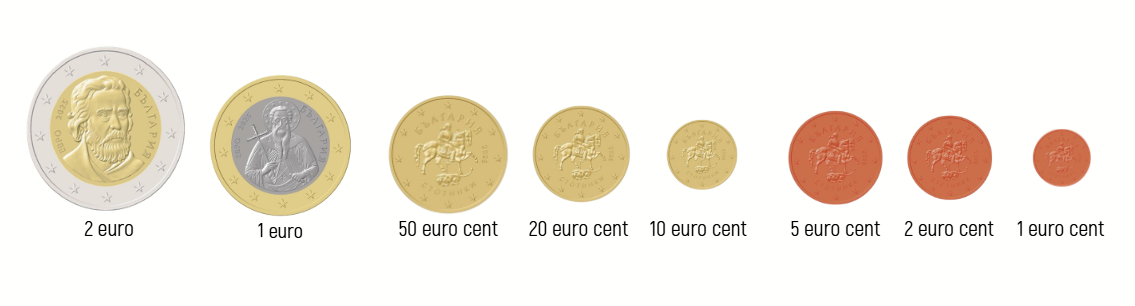
The design of Bulgaria’s euro coins has already been decided. They will mirror the design of the lev coins currently in use. The €2 coin will feature St. Paisius of Hilendar, the €1 coin will depict St. Ivan of Rila, and the Madara Rider will appear on the 1, 2, 5, 10, 20, and 50 cent coins. Soon, our coins will find their place in the wallets of Europeans, serving as a reminder that Bulgaria is part of the community.